
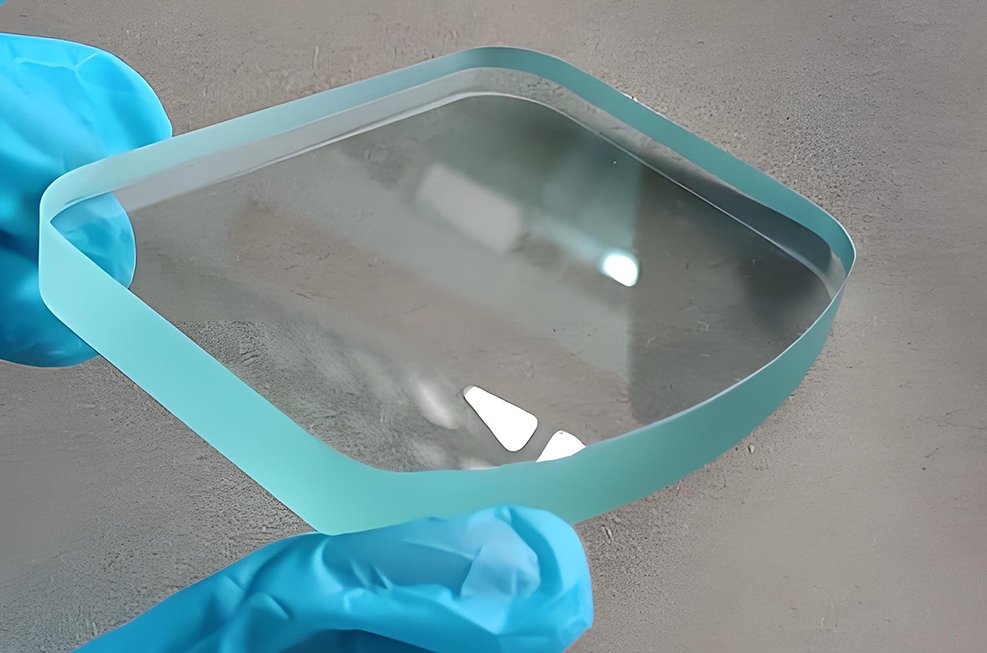
玻璃化学钢化 - 将玻璃从未钢化硬度4H左右提示提升到6~8H;如需9H请采用蓝宝石玻璃
钢化玻璃分为物理钢化和化学钢化。
在一定温度下,玻璃中的较小钠离子(Na+)会被熔盐中的较大钾离子(K+)替换。由于钾离子体积更大,会对玻璃表面形成“挤压”效果,从而产生稳定的表面压应力层。压应力越高,玻璃强度通常越高。
简单来说:普通玻璃容易因表面裂纹扩散而破裂;化学钢化后,表面压应力可抑制裂纹扩展,从而显著提高玻璃耐摔性与抗冲击能力。
硬度(铅笔硬度 H)
- 普通浮法玻璃(未钢化):铅笔硬度大约 4H
- 化学钢化(离子交换强化):表面压应力层,铅笔硬度普遍可以做到 6H 及以上
注意:铅笔硬度≠莫氏硬度 玻璃本身材质莫氏硬度≈5.5‑6,化学钢化不会改变基材本身莫氏硬度,提升的是表面抗划伤能力(铅笔硬度)、抗冲击强度
化学钢化玻璃
- 破碎不会变成颗粒(没有物理钢化那种颗粒化碎裂特性),依旧会裂成片状
- 好处:裂纹边缘相比普通原片,锋利程度下降、不容易形成极锋利的毛刺,割手风险降低
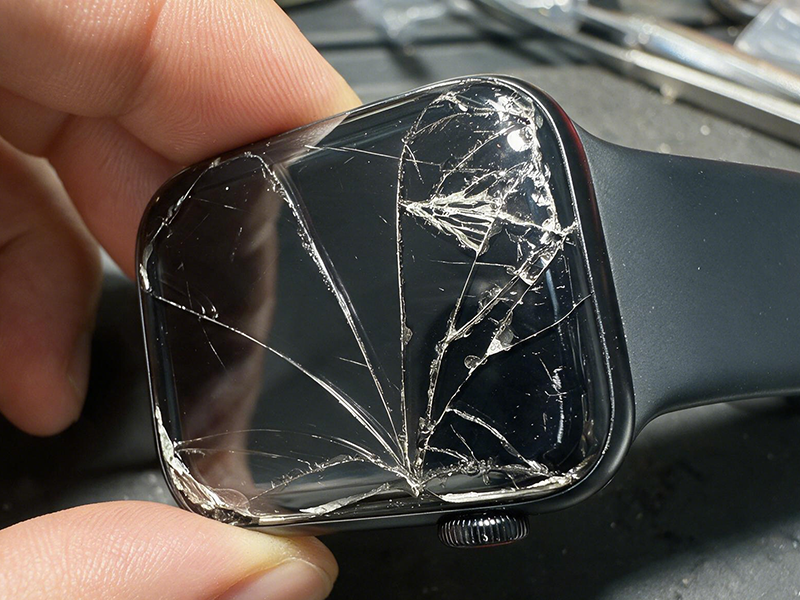
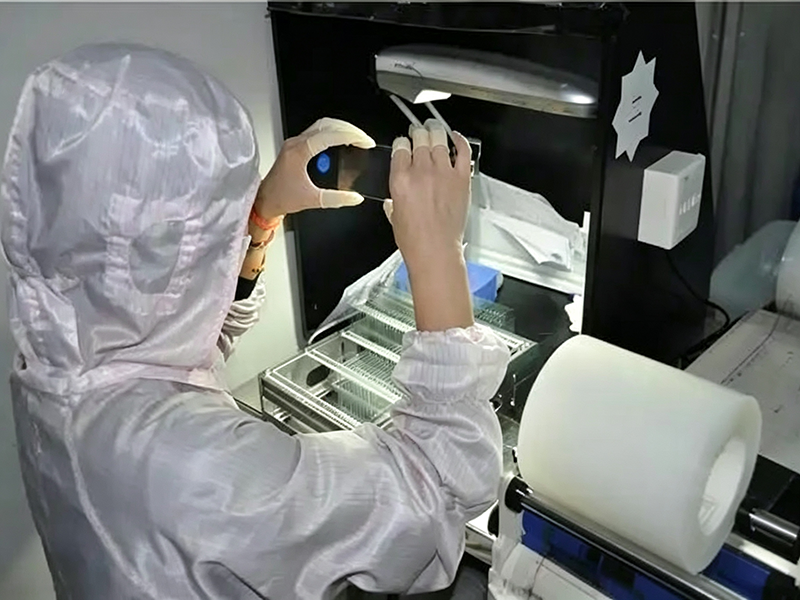
未钢化的玻璃硬度越4H,化学钢化后玻璃硬度可达6H以上;化学钢化的玻璃虽然没有颗粒度,但断面锐利程度下降,没有玻璃毛刺,大幅度减少割手风险。成产后我厂会经过严格双重检验:仪器检测和钢珠自由落体测试。钢化是玻璃厂的基础工艺,但我厂的品质行业领先。
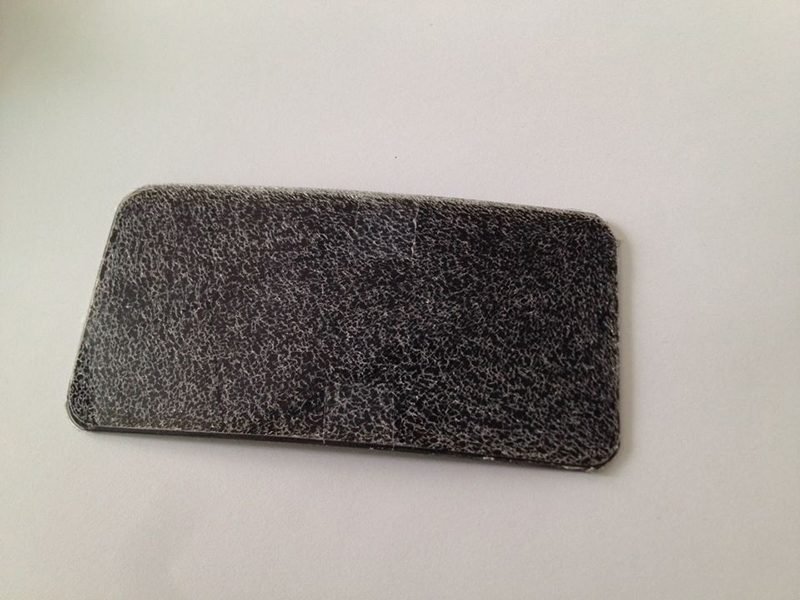
此样品是苹果原装手机玻璃,破裂后的样子。
生产方案是康宁玻璃+化学钢化。玻璃柔软性可以围绕水杯。所有,您可以在玻璃安全性方面您可以测试我们的硬度和韧性。
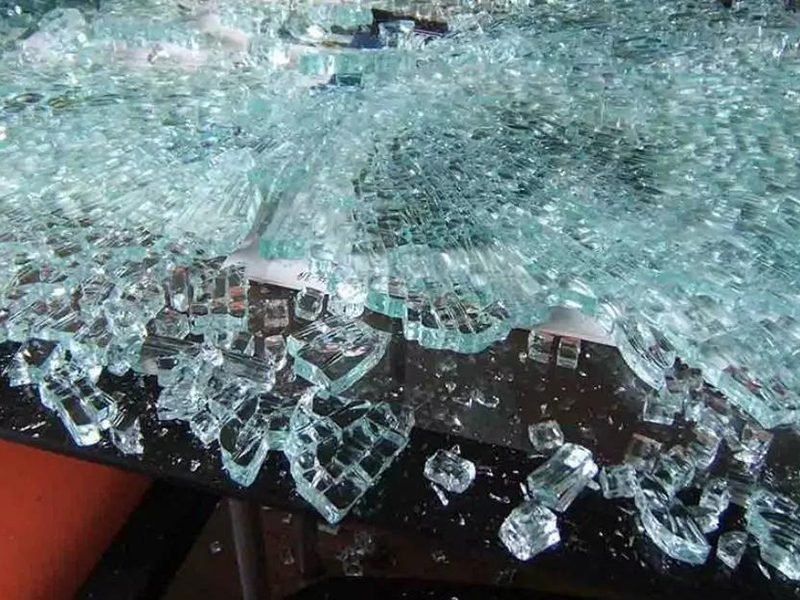
化学钢化的优势主要体现在以下几个方面:
更适合高精度小尺寸玻璃
对于复杂异形、小尺寸、高精度玻璃产品,化学钢化能够有效避免物理钢化带来的变形问题,更利于后续贴合与装配。
更适合超薄玻璃
化学钢化可应用于0.1mm~2mm超薄玻璃,而传统物理钢化通常对玻璃厚度要求更高。
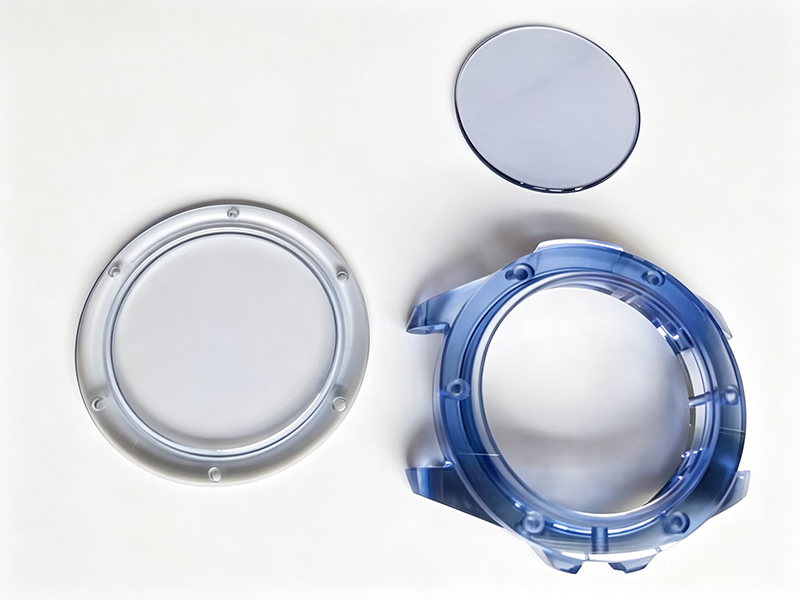
因此,手机玻璃、触控玻璃及智能穿戴玻璃大量采用化学钢化工艺。
玻璃平整度更高
物理钢化需要高温风栅冷却,容易产生轻微变形。
化学钢化过程中玻璃不会经历剧烈风冷,因此:
平整度更高
光学畸变更低
更适合高精度显示面板
表面质量更高
化学钢化后的玻璃表面更加均匀,不会产生明显风斑与应力颗粒感,可满足高端电子产品对于外观品质的要求。
硬度稳定
高精度电子玻璃通常可达到4H表面硬度,具有良好的耐刮擦性能与耐磨性能,适用于频繁触控及长期使用环境。
无颗粒度影响
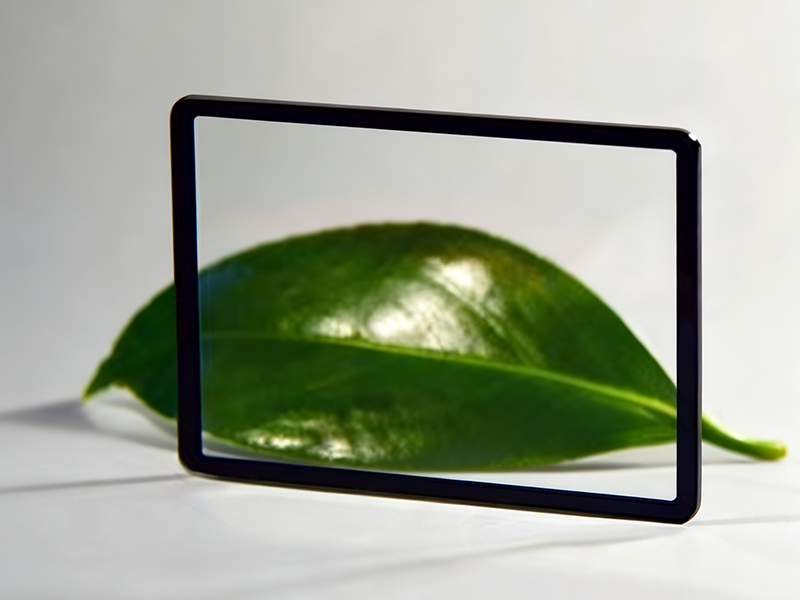
相比部分物理钢化玻璃可能出现的颗粒感、波纹度或光学畸变,化学钢化玻璃具有更好的光学一致性,可满足高透、高显示清晰度产品需求。
作为专业定制玻璃深加工厂家,我们主要专注于高精度化学钢化玻璃加工,可结合:
玻璃外形加工
CNC精雕
微孔加工
无尘丝印
AG/AR/AF镀膜
玻璃透光控制
热弯与异形加工
为电子产品生产商提供完整玻璃定制解决方案。
玻璃化学钢化 玻璃化学钢化 玻璃化学钢化 玻璃化学钢化 玻璃化学钢化 玻璃化学钢化 玻璃化学钢化 玻璃化学钢化 玻璃化学钢化 玻璃化学钢化 玻璃化学钢化 玻璃化学钢化 玻璃化学钢化 玻璃化学钢化 玻璃化学钢化 玻璃化学钢化 Chemical Tempering Glass: Precision Strengthening for High-Performance Electronic Glass
Chemical tempering is one of the most important strengthening technologies for high-precision glass used in modern electronic products. Compared with conventional untempered glass, which typically has a surface hardness of around 4H, chemical tempering can significantly improve surface hardness and scratch resistance. Depending on the glass composition and strengthening requirements, surface hardness can commonly reach approximately 6H to 8H. For applications requiring a hardness level around 9H, sapphire glass is generally a more suitable material choice.
Tempered glass can be broadly divided into two major categories: physical tempering and chemical tempering. Although both processes are designed to improve the mechanical performance of glass, their strengthening mechanisms, applicable glass thicknesses, dimensional stability, and application fields are significantly different.
For high-end precision electronic glass, chemical tempering is often the preferred strengthening method because it can enhance mechanical performance while maintaining the original dimensions, flatness, optical properties, and surface quality of the glass.
What Is Chemical Tempering?
Chemical tempering is an advanced glass strengthening process based on an ion-exchange reaction. Unlike physical tempering, which uses high-temperature heating followed by rapid air cooling, chemical tempering is generally performed at relatively low temperatures and does not require the glass to undergo thermal deformation.
During the process, the glass is immersed in a specially formulated molten salt or chemical strengthening solution under controlled temperature conditions. Smaller sodium ions (Na+) located near the glass surface are replaced by larger potassium ions (K+).
Because potassium ions are larger than sodium ions, the ion-exchange process creates a compressive stress layer on the glass surface. This dense surface compression helps prevent microscopic cracks from propagating, thereby improving the glass’s resistance to scratching, impact, and mechanical damage.
The basic principle can be understood simply:
Ordinary glass can break when surface cracks continue to expand.
Chemical tempering creates compressive stress on the glass surface.
The compressive stress suppresses crack propagation.
The glass therefore achieves improved strength and impact resistance.
The higher and more uniform the surface compressive stress, the greater the potential improvement in mechanical performance, although the final strength also depends on the glass composition, thickness, ion-exchange parameters, edge quality, and other manufacturing factors.
Chemical Tempering vs. Physical Tempering
Physical tempering strengthens glass through a high-temperature thermal process. Flat glass is heated to a temperature close to its softening range and then rapidly cooled by high-pressure air directed across both surfaces. The surface cools and contracts quickly, while the interior cools more slowly. This creates a compressive stress layer on the surface and tensile stress within the glass body.
Physically tempered glass has significantly improved impact and mechanical resistance. When it breaks, it generally breaks into relatively small, granular fragments rather than large sharp shards, which provides important safety advantages for architectural and industrial applications.
However, the high-temperature heating and rapid air cooling involved in physical tempering can introduce certain limitations for precision glass components. Depending on the glass thickness, shape, size, and processing conditions, thermal deformation, bow, roller wave, optical distortion, or other dimensional effects may occur.
Chemical tempering works differently. Because the strengthening process relies primarily on ion exchange rather than high-temperature thermal deformation, it is particularly suitable for thin, small, curved, irregular, and precision-machined glass components.
Why Chemical Tempering Is Ideal for Precision Electronic Glass
Modern electronic products increasingly require glass components that are thin, lightweight, optically clear, dimensionally accurate, and mechanically durable. These requirements make chemical tempering especially valuable for applications such as smartphone cover glass, smartwatch glass, touch panels, optical components, and precision instrument panels.
Better Dimensional Stability
One of the most important advantages of chemical tempering is its excellent dimensional stability.
Because the process does not rely on the same high-temperature heating and rapid air-cooling cycle used in physical tempering, it can minimize thermal deformation. Properly controlled chemical tempering does not significantly alter the original dimensions, flatness, transparency, or curvature of the glass.
This makes the process particularly suitable for:
Ultra-thin glass
Curved hot-bent glass
Special-shaped precision glass
Micro-hole glass
CNC-machined glass
Small precision electronic components
Maintaining dimensional accuracy is especially important for components that must be precisely aligned with displays, sensors, housings, optical modules, or other electronic assemblies.
Suitable for Ultra-Thin Glass
Chemical tempering is highly suitable for thin glass that cannot easily undergo conventional thermal tempering. Depending on the material and processing requirements, chemical strengthening can be applied to glass in the approximate range of 0.1 mm to 2 mm.
This capability makes chemical tempering widely applicable to mobile phone glass, touch-control glass, smartwatch glass, wearable electronics, and other thin electronic components.
For ultra-thin glass, maintaining flatness and dimensional accuracy is often just as important as increasing mechanical strength. Chemical tempering provides a practical solution by strengthening the surface without relying on significant thermal deformation.
Improved Flatness and Optical Consistency
Physical tempering may introduce optical distortion, roller wave, or slight deformation because of its high-temperature heating and rapid air-cooling process. These effects can be particularly noticeable in high-precision optical and display applications.
Chemical tempering generally provides better dimensional and optical consistency because the glass does not need to pass through the same aggressive thermal tempering cycle.
As a result, chemically tempered glass can offer:
Better flatness
Lower optical distortion
More consistent surface quality
Improved visual clarity
Better suitability for precision display panels
More uniform optical performance
This is especially important for high-transmission electronic glass where even minor optical irregularities can affect the perceived quality of the finished product.
Surface Hardness and Scratch Resistance
Chemical tempering can significantly improve the surface performance of glass. Untempered glass commonly has a surface hardness around 4H, while properly chemically strengthened glass can achieve approximately 6H to 8H depending on the material and process conditions.
Higher surface hardness improves resistance to scratches and daily wear, making chemically tempered glass suitable for products that are frequently touched or exposed to repeated friction.
For applications specifically requiring approximately 9H surface hardness, sapphire glass should generally be considered instead. Sapphire is significantly harder than conventional glass and offers excellent scratch resistance, making it suitable for demanding premium applications where exceptional surface durability is required.
No Granular Appearance or Significant Tempering Distortion
Another important advantage of chemical tempering is its excellent optical consistency. Since chemical strengthening does not rely on rapid air cooling, it avoids many of the optical effects associated with conventional thermal tempering.
For high-end electronic products, this can help maintain a clean and consistent visual appearance. The glass can retain high transparency and display clarity while avoiding obvious tempering-related optical irregularities.
For precision products such as smartphone screens, wearable devices, optical glass, and instrument panels, these characteristics can contribute to a more refined final product.
Chemical Tempering for Apple-Style Smartphone Glass
A typical example of chemically strengthened glass can be found in premium smartphone cover glass. Original smartphone glass components, including those used in high-end mobile devices, commonly require a combination of thinness, optical clarity, dimensional accuracy, scratch resistance, and impact resistance.
A representative production solution may use high-quality Corning glass combined with chemical strengthening technology. The result is a thin precision glass component with enhanced surface compression while preserving the optical and dimensional characteristics required for advanced smartphone assembly.
Integrated Precision Glass Processing
As a professional custom glass deep-processing manufacturer, we focus on precision chemical tempered glass and can integrate strengthening with multiple glass processing technologies.
Our capabilities can include:
Custom glass shape processing
CNC precision engraving
Micro-hole machining
Dust-free silk screen printing
AG, AR, and AF coatings
Light transmission control
Hot bending
Special-shaped glass processing
Edge grinding and polishing
Surface finishing
By integrating these processes into one manufacturing solution, we can provide customized glass components for electronics manufacturers and other industrial customers.
From ultra-thin electronic glass and curved smartwatch glass to precision optical components, micro-hole glass, and customized display panels, our chemical tempering technology provides a reliable strengthening solution where mechanical durability, dimensional stability, optical clarity, and refined surface quality are all important.
For manufacturers seeking high-performance customized glass, chemical tempering offers an effective balance between strength, precision, optical consistency, and product appearance, making it an ideal choice for the next generation of high-end electronic and precision glass components.
页面目录
Toggle